

Saguaro Cactus
An icon of the Sonoran Desert
The saguaro (Carnegiea gigantea) relies on desert nurse trees for shade, growing just over an inch per year up to reach a full height of 60 feet and producing its first blossoms around age thirty-five. Over a lifespan exceeding two centuries, these giants grow numerous arms, yield state flowers pollinated by bats and birds, and produce fruit containing thousands of seeds.
Life Cycle
Early Life
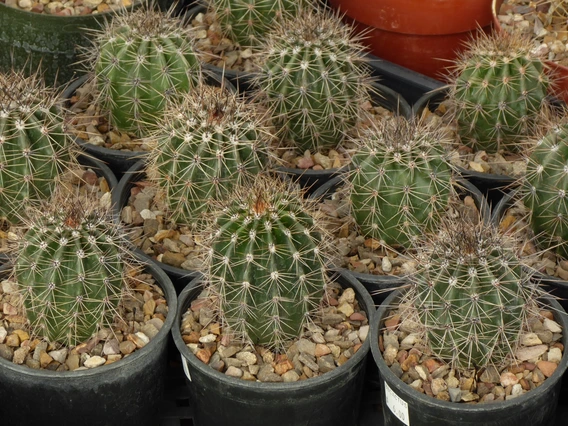
Saguaros often mature in the shade of mesquite, paloverde or ironwood trees. They grow about 1-1.5 inches per year, but this can vary depending on location and rainfall. Young saguaros grow as a single trunk that produces flowers at about 35 years.
Reproduction
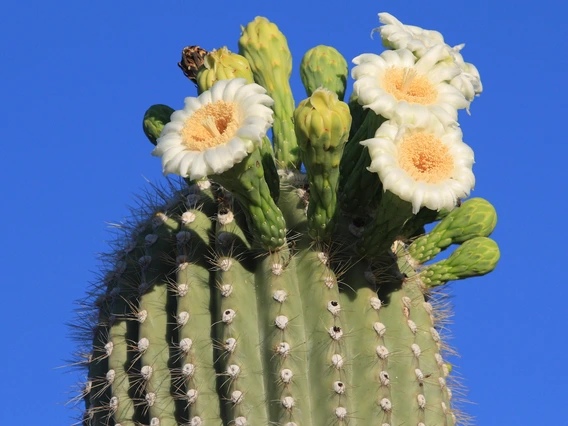
The saguaro blossom, Arizona's state flower, usually is open for one day only and is pollinated by bats, birds and insects. Seeds are spread by birds and other animals that eat the fruit. Each fruit can have up to 2,000 seeds.
Maturity
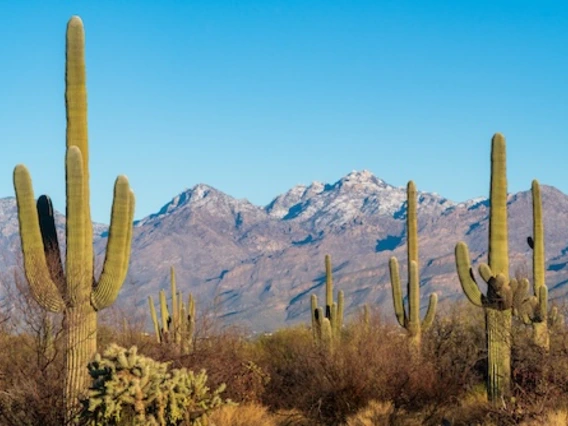
After about 50-70 years, depending on conditions, saguaros may begin to grow arms. An old saguaro may produce more than 20 arms. Saguaros continue to grow and add arms until they die, usually between 150-175 years. Some live more than 200 years.
