Arizona Insect Festival draws thousands to campus for hands-on learning
University of Arizona faculty, staff and graduate students brought university expertise directly to the public at the one-day free event.

The annual Arizona Insect festival offers chance to get your hands on a variety of bugs - if you dare.
Brad Poole, Cooperative Extension
The University of Arizona Entomology Department was named No. 1 in the world for research performance in 2023, 2024, 2025 and 2026. In 14 years of the past 16 years, department faculty and staff have opened their doors to the public for the Arizona Insect Festival, which in 2025 drew more than 4,000 people to the campus to get up close and personal with – and learn about – insects.
The public swarmed to the University of Arizona campus like bees to honey on October 4 for some hands-on education about our tiny neighbors that, according to at least one researcher, run the world: Insects.
“It's our big outreach event. It's where we get to tell the public about insects, about science in general. It's science education done in a really fun way,” said Arizona Insect Festival organizer Todd Schlenke, an associate professor in the U of A Department of Entomology.

The calleta silkmoth, Eupackardia calleta, was the theme insect for the festival.
Brad Poole, Cooperative Extension
Held annually in the desert-adapted courtyard of the ENR2 building, the festival brought thousands of local residents face-to-face with the fascinating world of insects and arthropods. The free, single-day event transforms complex academic research into an accessible, hands-on carnival for visitors of all ages.
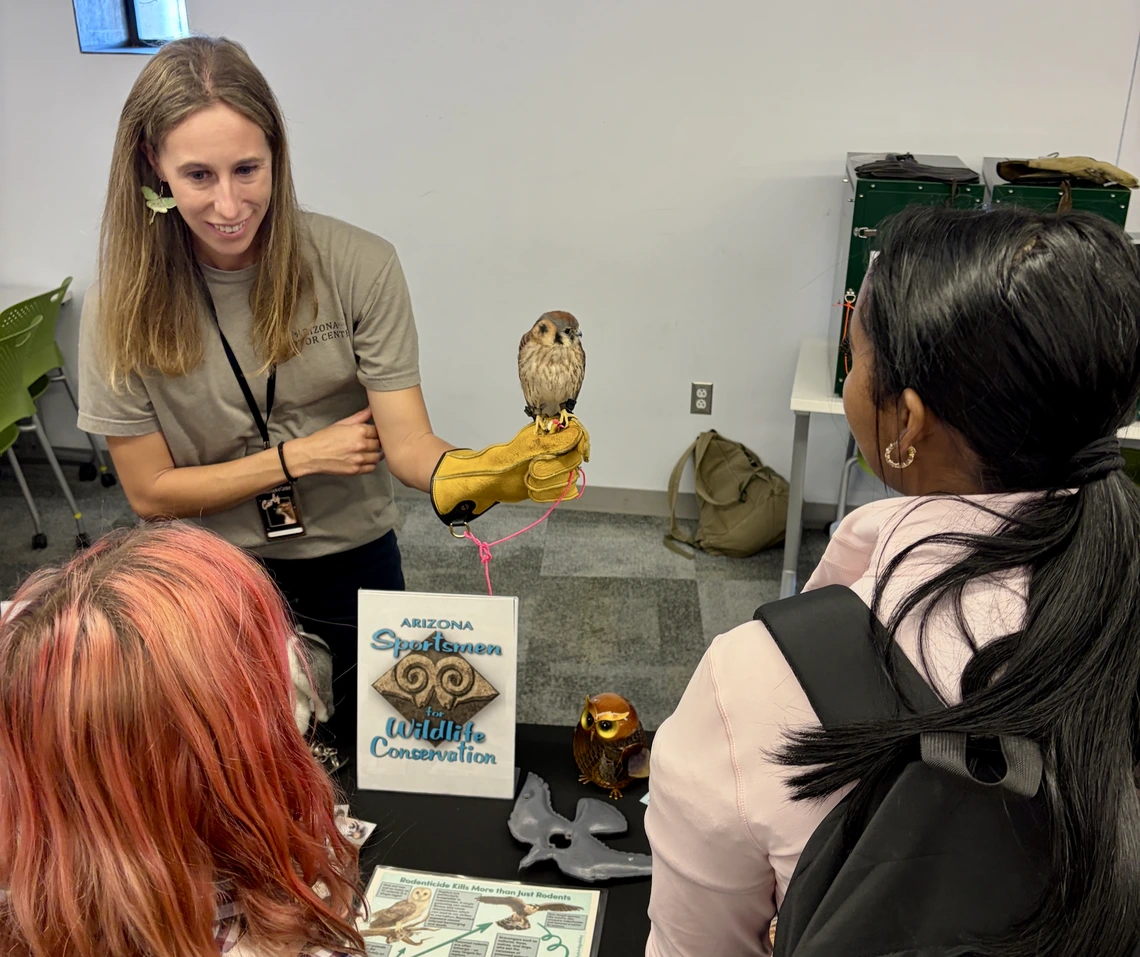
With 35 booths staffed by university faculty and students and regional natural resource partners, the festival offered exhibits from the Arizona-Sonora Desert Museum, Flandrau Science Center, Saguaro National Park and more. Attendees designed clay bugs at the Build-a-Bug station, sampled edible crickets and met native pollinators up close.
Insects are unsung heroes of the planet, said entomologist Wendy Moore, professor and insect systematics curator of the U of A Insect Collection, which at 2 million specimens is the world’s largest collection of insects from the Sonoran Desert Region.
"The festival makes a big difference. People protect what they know and love. When folks come here and fall in love with insects, they become advocates for insects and for the environments insects both depend on and help create," Moore said.
The festival helps people see past their fear and appreciate the beauty of insects and their importance to healthy ecosystems, she said.
Graduate researchers from the Entomology and Insect Science program led discussions on medical entomology, monsoon insect diversity and scientific careers. The kid-friendly blend of interactive discovery, community partnership and scientific passion offers inspiration to a new generation of desert naturalists while celebrating the tiny engineers sustaining Arizona's delicate ecosystems.
The event takes advantage of kids’ innate wonder and curiosity, said Extension Specialist Kathleen Walker, an entomologist and associate professor in the department.
“Kids are not prejudiced against insects, and they understand intuitively that insects are cool and kind of special. There's a big emphasis on sharing your science with other scientists, but that's really not enough. A university needs to share its science with everybody, and the first place to start is with your neighbors,” Walker said.
The festival, which every year includes food trucks and art vendors, is about more than just insects and arthropods, Walker said.
“It's about connecting ourselves to the natural world. I look at an insect in my backyard, and I realize that I can see all sorts of incredible natural history happening literally at my porch lamp. That connection of everybody to where they live and to the organisms that live with them is really special.”